
Aesthetic Clinic Memberships vs Prepaid Credits: What's the Difference?
What is an aesthetic clinic membership?
An aesthetic membership is a recurring subscription, paid monthly or annually, that gives patients access to a defined set of benefits for as long as they remain a member. Those benefits typically include a combination of included treatments, priority booking, member-only pricing on additional services, and access to a rewards programme.
Memberships are ongoing. Patients don't buy a finite amount of value upfront and spend it down. They pay regularly and receive a consistent stream of benefits in return. The relationship continues month after month, which is what makes memberships so effective for retention.
Practices offering memberships earn on average 22% more revenue than those that don't. Members attend more regularly, spend more per visit on additional treatments, and are significantly less likely to switch to a competitor because the membership creates a concrete reason to stay.
What are prepaid credits or a beauty bank?
Prepaid credits, sometimes called a beauty bank or treatment bank, are a lump sum paid upfront in exchange for a credit balance the patient can spend on treatments over time. The patient buys, say, £500 of credit and spends it across appointments over the following months, often at a slight discount compared to paying individually.
The appeal for patients is flexibility. They can allocate their credit across whichever treatments they want, at whatever pace suits them. For the clinic, prepaid credits generate a cash injection upfront and commit the patient to spending with you rather than a competitor for as long as their balance lasts.
The key difference from a membership is that prepaid credits are finite. Once the balance is spent, the relationship ends unless the patient tops up or books another package. There's no automatic continuation, no recurring payment, and no built-in reason to stay beyond the balance running out.
How they compare across the things that matter most
Revenue predictability
Memberships win here. Monthly direct debits create a revenue floor you can plan around. You know at the start of every month what's coming in from your member base before a single appointment is booked. Prepaid credits generate strong one-off revenue events but create unpredictable months depending on when patients buy or top up.
Patient retention
Memberships are structurally better for retention because they have no natural end point. A patient on a monthly membership stays until they actively cancel, and most won't unless something goes wrong. Prepaid credit patients are retained only until their balance runs out, at which point they make a fresh decision about where to spend next. That decision point is a churn risk memberships don't have.
Patient appeal and ease of sale
Prepaid credits are often easier to sell to new or occasional patients because they don't feel like a commitment. Paying £300 upfront for credit you can spend however you like feels lower-risk than signing up for a recurring monthly fee. For patients who aren't yet sure how often they'll come in or what treatments they want, a credit package is a more comfortable starting point.
Memberships tend to appeal more to established patients who already know they want to attend regularly and see the value in a structured plan. They're easier to sell to someone with a treatment history at your clinic than to a brand-new patient on their first visit.
Upfront cash flow
Prepaid credits generate immediate cash. A patient buying £500 of credit pays today; the clinic receives the full amount before delivering a single appointment. This can be useful for cash flow management, particularly for clinics that are growing or investing in new equipment and treatments.
Memberships build revenue more gradually. The first month's payment is modest compared to a lump-sum credit purchase, but the compounding value over 12 or 24 months of membership significantly outweighs a one-off package for most patients.
Loyalty and engagement between appointments
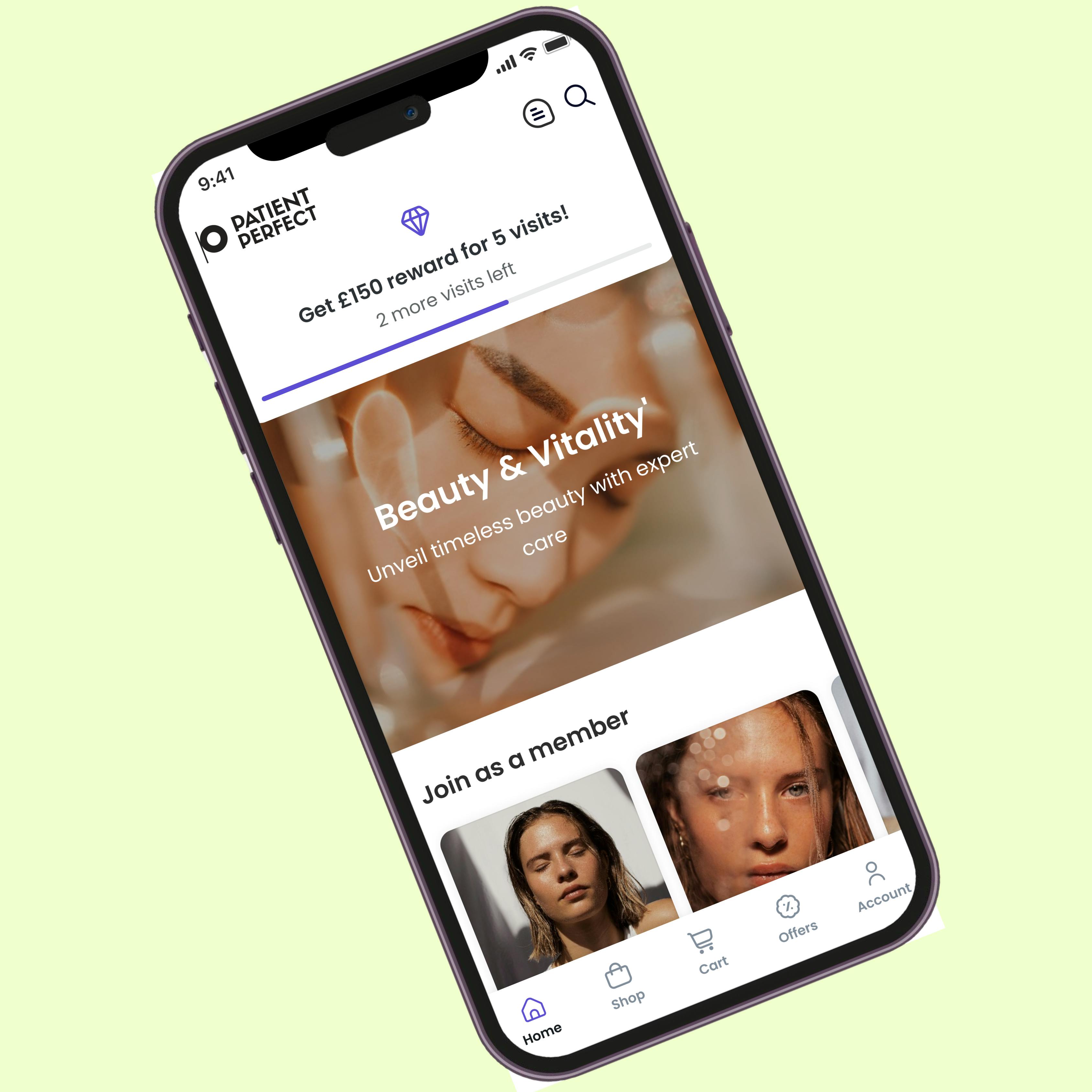
A membership, particularly when delivered through a branded patient app, creates an ongoing touchpoint between appointments. Members can check their benefits, earn rewards, refer friends, purchase additional treatments, and receive personalised communications. The clinic stays present in their daily life rather than existing only at appointment time.
Prepaid credit patients have less reason to engage between appointments. Their relationship with the clinic is transactional: they have a balance to spend, and they'll come in when they want to spend it. There's no inherent mechanism pulling them back or keeping the clinic top of mind in between.
Do memberships and prepaid credits work well together?
Yes, and this is the approach most well-run aesthetic clinics end up taking. They're not competing products; they serve different patients at different stages of the relationship.
A prepaid credit package is often the right entry point for a new patient who isn't ready to commit to a monthly membership. It gets them spending with your clinic, gives them a positive experience across multiple treatments, and builds the familiarity and trust that makes a membership feel like a natural next step rather than an ask they weren't expecting.
The most effective use of both products treats prepaid credits as an onboarding tool and memberships as the retention engine. Once a patient has spent their credit and had a consistently good experience, introducing a membership is an easy conversation: it costs less per month than they've been spending, it keeps their care consistent, and it gives them benefits they wouldn't otherwise access.
Running both also lets you meet patients where they are. Some will always prefer the flexibility of buying credit as and when they want to spend. Others will value the predictability and perks of a membership. Giving patients the choice, and communicating the differences clearly, leads to better conversion rates on both.
What makes a membership genuinely worth joining?
The membership has to feel like a better deal than not being a member. That sounds obvious but a lot of clinic memberships fail because the benefits aren't compelling enough to justify the recurring commitment, or they're not communicated clearly enough for patients to understand the value.
The most effective aesthetic memberships tend to combine:
• Included treatments that the patient would be booking anyway (skin consultations, maintenance treatments, or regular appointments relevant to their specific concerns)
• A meaningful discount on additional treatments, applied automatically rather than requiring the patient to ask
• Access to a rewards programme where points accumulate across all spending and redeem against future treatments
• Priority booking or early access to new treatments, which signals that members are valued differently
• A branded digital experience through an app, so the membership feels premium rather than like a discount card
Clinics that introduce a structured rewards programme alongside their membership see an average 16% increase in revenue, because engaged members spend more per visit and stay longer than members who are just on the plan without any additional loyalty mechanism.
How PatientPerfect supports both models
PatientPerfect is clinic membership and patient retention software built for aesthetic and dental practices. The platform supports both memberships and prepaid treatment banks, delivered through a custom-branded patient app that makes both products easy for patients to access, understand, and use.
Memberships are set up around your specific pricing and treatment offering, with automated payment collection, renewal management, and member tracking built in. Prepaid credits work as a beauty bank or treatment bank within the same app, so patients can check their balance and make purchases.
On top of that, the platform includes a rewards programme, one-click referrals, flexible finance options, and personalised communications. In-app referral programmes increase new patient acquisition by an average of 23%, giving your existing member base a built-in mechanism to grow your clinic on your behalf.
Every clinic gets a fully bespoke setup configured around their brand, their pricing, and their patient base.
Click here to book a free demo, and we'll show you how to set up both models in a way that works for your clinic.
Frequently asked questions
What is the difference between an aesthetic clinic membership and a beauty bank?
An aesthetic clinic membership is a recurring subscription where patients pay monthly or annually in exchange for ongoing benefits: included treatments, discounts, rewards, and priority access. A beauty bank, or treatment bank, is a prepaid credit package where patients pay a lump sum upfront and spend it down across treatments over time. The key difference is continuity: memberships are ongoing with no end point, while beauty banks are finite and end when the credit runs out.
Which is better for an aesthetic clinic: a membership or prepaid credits?
Both serve different purposes and work best together rather than as alternatives. Prepaid credits are better for attracting new or occasional patients who aren't ready to commit to a recurring plan. Memberships are better for building long-term retention, predictable recurring revenue, and deeper patient loyalty. Most successful aesthetic clinics use prepaid credits as an entry point and memberships as the longer-term retention product.
How much should an aesthetic clinic membership cost?
Pricing depends on what's included, your location, and your patient demographic. Most aesthetic clinic memberships sit somewhere between £25 and £75 per month, with premium tiers at higher price points for clinics offering more extensive included treatments. The monthly price should represent clear value compared to paying for the same treatments individually, but it doesn't need to be a steep discount. The convenience, consistency, and member benefits are part of the value proposition.
Can patients have both a membership and a prepaid credit balance?
Yes, and many do. A patient might be on a monthly membership for their core treatments and also hold a prepaid credit balance they use for additional purchases or products. Running both through the same branded app makes it straightforward for patients to manage both, see their balances, and understand what they're getting from each.
How do I persuade patients to switch from prepaid credits to a membership?
The most natural moment to introduce a membership to an existing credit patient is when their balance is running low or at renewal. Frame it as a comparison: show them what they've spent over the past year, what that would cost as a monthly membership, and what additional benefits they'd get as a member that they currently don't have. For patients who are already spending consistently with you, the membership almost always works out better value, and that's usually the most persuasive point in the conversation.
What software do I need to run an aesthetic clinic membership?
You need a platform that handles recurring payment collection, member benefit tracking, and patient communications as a minimum. The best clinic membership software for aesthetic practices goes further, combining membership management with a branded patient app, prepaid credit or beauty bank functionality, rewards, referrals, and flexible finance in one place. PatientPerfect is built specifically for aesthetic and dental clinics and includes all of these in a fully bespoke setup configured around your practice.
revenue growth
rewards
loyalty
marketing
client engagement
Memberships
Related articles

PatientPerfect
Sep 20, 2026
How to Get More Dental Patients in 2026 Without Spending More on Ads
Most conversations about growing a dental practice end up in the same place: more marketing spend, more ad budget, more money going out before a single new patient walks through the door. It's a reasonable starting point, but for a lot of independent practices, it's not the most efficient place to focus. The practices growing steadily in 2026 aren't necessarily the ones spending the most on paid acquisition. They're the ones that have built proper systems for keeping the patients they already have, turning those patients into referrers, and making the overall experience good enough that word of mouth does a significant portion of the work. This guide covers the most effective ways to grow your patient base in 2026 without increasing your ad spend, and how the right infrastructure makes each of them easier to execute consistently.
revenue growth
rewards
loyalty
marketing
client engagement
Memberships

PatientPerfect
Sep 20, 2026
How to reduce admin in your dental practice without hiring more staff
Admin is one of the biggest frustrations in running a dental practice. Tasks pile up relentlessly, and most practice owners reach for the only answer: another pair of hands. Another receptionist, another coordinator, another salary. The problem is that solution scales cost alongside workload instead of solving the underlying inefficiency. Every admin task your team handles manually is a task that either happens more slowly than it should, or happens at the expense of something more valuable, usually patient-facing time. The most effective dental practices in 2026 aren’t the ones with the biggest teams. They’re the ones that have identified which admin tasks take the most time and systematically removed the manual effort. This guide covers exactly how to do that.
revenue growth
rewards
loyalty
marketing
client engagement
Memberships

PatientPerfect
Sep 20, 2026
The £100k membership strategy - How to generate over £100k of annual income for your aesthetic clinic or dental practice through membership subscriptions
Most clinic owners think about growth the same way. More new patients. More marketing. More budget going out before anything comes back in. It’s an exhausting cycle, and it’s also an inefficient one, because the revenue you’re spending money to find is often already sitting in the patient base you’ve already built. The clinics generating £100k or more in annual membership revenue aren’t the ones with the biggest ad budgets. They’re the ones that have built a recurring income structure from patients who were already loyal, already spending, and already coming back. A membership doesn’t ask those patients to spend more. It converts the spending they’re already doing into a predictable monthly commitment. This guide explains exactly how the maths works, what it takes to get there, and how aesthetic clinics and dental practices across the UK are building membership programmes that generate six-figure annual revenue without first needing to significantly grow their patient list.
revenue growth
rewards
loyalty
marketing
client engagement
Memberships