
How to Get More Dental Patients in 2026 Without Spending More on Ads
Fix retention before you try to grow
The most overlooked growth lever in dentistry is the patients already on your books. A practice that sees 500 active patients but loses 100 of them a year to inactivity, lapsed recalls, or drifting to a competitor has a retention problem that no amount of new patient marketing will solve sustainably.
Before you think about where your next new patient is coming from, look at what's happening to the patients you already have. How many are overdue a recall? How many have dropped off contact in the last 12 months? How many had a treatment plan discussed but never booked in? The revenue and patient growth sitting in those gaps is almost always more accessible than the equivalent from paid advertising.
Practices that introduce structured memberships see a meaningful improvement in recall compliance and attendance consistency because the membership gives patients a concrete reason to keep their appointments rather than letting them drift. Practices offering memberships earn on average 22% more revenue than those that don't, and much of that comes from existing patients attending more regularly rather than from new patient acquisition alone.
Build a referral system, not just a referral hope
Word of mouth has always been the most cost-effective way to grow a dental practice. The problem is that most practices rely on it happening passively: a happy patient mentions the clinic to a friend at some point, and maybe that friend books.
When a patient can refer someone with a single tap through your app, share a personalised link, or hand over a referral code that benefits them both, the conversion rate from word of mouth improves significantly. Clinics with an in-app referral programme see an average 23% increase in new patient acquisition, because the recommendation that was always happening informally now has a frictionless path from thought to action.
The key is making it easy and making the incentive clear. A meaningful reward for the referring patient, a welcoming offer for the new patient, and a one-click mechanism to share it. When those three things are in place, referrals become a consistent, measurable channel rather than an occasional bonus.
Make your Google presence work harder
For most dental practices, Google is still the primary channel through which patients find them. But in 2026, what it means to perform well on Google has changed. AI Overviews are now summarising dental options directly on the results page, and patients are increasingly choosing before they've clicked through to a single website.
Your Google Business Profile needs to be complete and accurate: every service listed, every category selected, current opening hours, a recent selection of photos, and a description that actually explains who your practice helps and what makes it the right choice. This is free to maintain, and it directly affects whether AI and local search surface you when a patient nearby is looking.
Reviews are a core part of this, and not just your overall rating but the content and recency of your reviews. AI search tools read review patterns to understand what a practice is known for. If your reviews consistently mention nervous patient care, clear pricing, and easy booking, that becomes part of how you get recommended. If they mention long waits or confusing costs, that becomes part of the picture too. Responding to reviews promptly is also a signal Google weighs positively in local rankings.
Use educational content to attract patients before they're searching for a dentist
A lot of dental patients don't start their journey by searching for a clinic. They start by searching for answers: does whitening damage enamel, why are my gums bleeding, how long do veneers last, what's the difference between Invisalign and fixed braces. If your practice has clear, specific answers to these questions on your website, you get found at the research stage, before the patient has even decided to book anywhere.
This kind of content performs well in AI search because it matches exactly how people ask questions. A page that answers 'how long does dental bonding last' in plain, specific language is far more likely to be surfaced by an AI summary than a generic services page. It also builds trust before the first appointment has been booked: a patient who's read three useful articles from your practice already feels like they know you.
You don't need a large content operation to make this work. A focused set of pages answering the questions your patients ask most frequently, written in the way they actually ask them, consistently outperforms broad, generic content published at high volume.
Keep existing patients engaged between appointments
Most dental practices have a communication gap between appointments. A patient comes in, has a good experience, receives a recall reminder six months later, and hears nothing in between. That gap is where patients drift. Life gets busy, the reminder gets missed, and inertia takes over.
Practices that stay in contact with patients between appointments, through relevant and timely communications rather than generic marketing blasts, see significantly stronger retention and engagement. The type of communication matters. A message reminding a patient that their hygiene appointment is coming up, or that they have unused membership benefits before their plan renews, is far more effective than a promotional email about a treatment they've never expressed interest in.
A branded patient app makes this sustainable without adding manual workload to your team. App-using patients return on average three times more each year compared to before the app was introduced, because the practice stays present and accessible rather than existing only in appointment reminders. When it's easy to rebook, easy to purchase, and easy to reach your clinic, patients stay connected.
Offer flexible payment options to convert more treatment plans
A significant number of patients who decline or delay treatment aren't doing so because they don't want it. They're doing so because a large one-off cost feels hard to justify right now. The treatment plan gets discussed, sounds good in principle, and then gets deferred indefinitely.
Flexible finance options, including Buy Now Pay Later with no late fees or hidden charges, remove the primary barrier for a meaningful percentage of patients in this situation. When a patient can commit to a treatment plan today and spread the cost over several months, the conversation shifts from 'I'll think about it' to 'let's book it in'. That conversion improvement doesn't require a new patient, a new ad, or a new marketing channel. It comes from doing more with the patient already sitting in your chair.
Introduce a rewards programme that gives patients a reason to stay
Loyalty in dental care is often assumed rather than earned. Patients stay with a practice by default rather than by choice, which makes them vulnerable to switching when something prompts them to reconsider: a friend recommends somewhere else, they move house, or they see a promotional offer nearby.
A structured rewards programme gives patients a positive reason to stay rather than just an absence of a reason to leave. Points earned on appointments and purchases, redeemable against future treatments or products, create a tangible benefit that accumulates over time and makes switching feel like a loss rather than a neutral choice. Clinics that introduce a structured rewards programme see an average 16% increase in revenue, driven by stronger retention, higher spend per visit, and more consistent engagement across their patient base.
How PatientPerfect brings this together
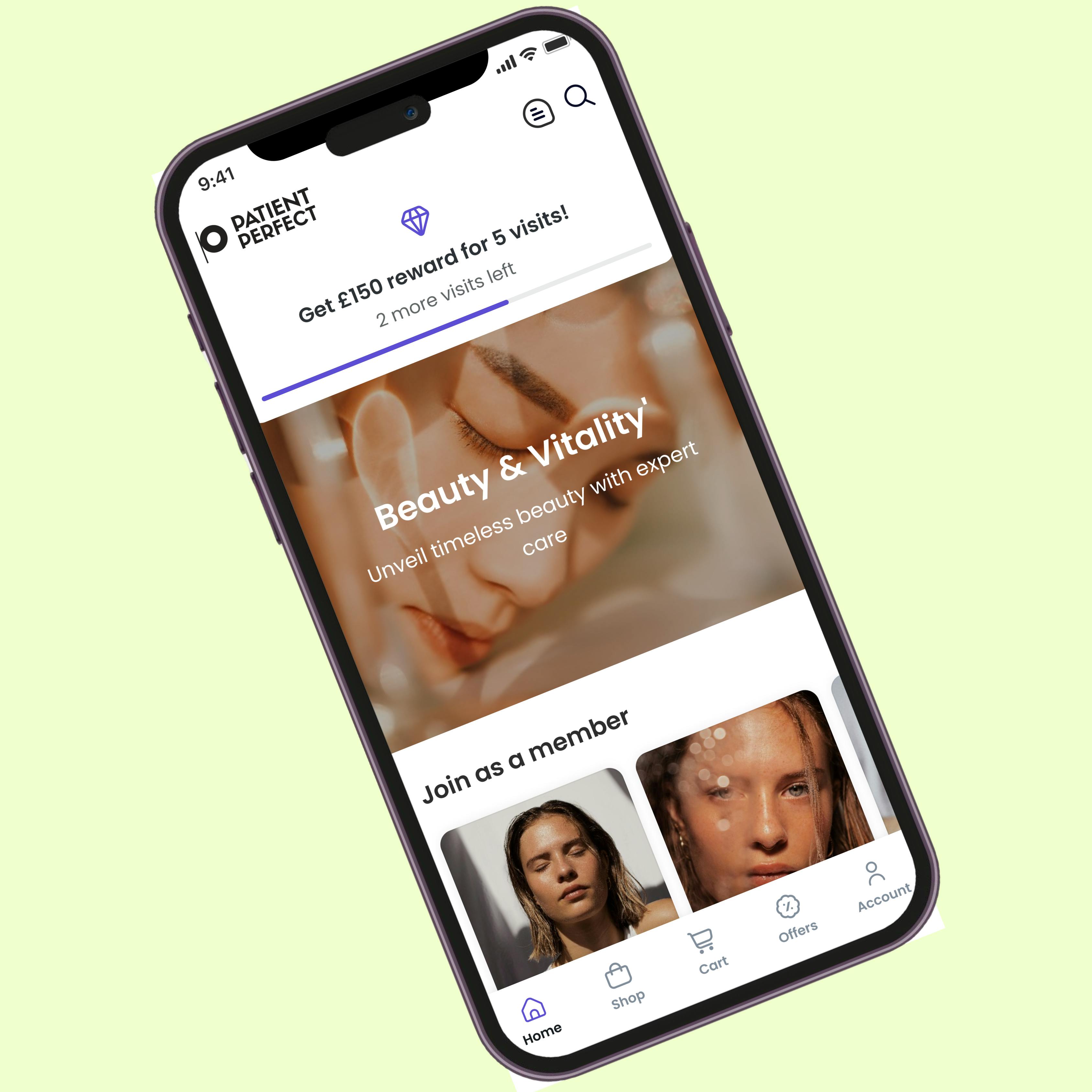
PatientPerfect is clinic membership and patient retention software for dental and aesthetic practices. The platform combines the tools that make each of the strategies above easier to execute consistently: a custom-branded patient app, membership management, in-app purchasing, a rewards programme, one-click referrals, flexible finance, and personalised communications, all set up around your practice's specific brand and patient base.
Rather than managing referrals, rewards, memberships, and communications across separate tools or manually, PatientPerfect connects them in a single platform your patients interact with through one branded experience. Every clinic gets a bespoke setup with full onboarding support, and most practices are live within two weeks.
Growing a dental practice in 2026 doesn't have to mean spending more to acquire patients you haven't met yet. The most efficient path for most independent practices runs through the patients they already have: keeping them longer, engaging them more consistently, and making it easy for them to bring in the people they know.
Click here to book a free demo and see how PatientPerfect can help you grow your practice without increasing your ad spend.
Frequently asked questions
How do I get more patients at my dental practice without advertising?
The most effective non-advertising growth channels for dental practices are structured referral programmes, improved patient retention through memberships, a stronger Google Business Profile, educational content that attracts patients at the research stage, and a rewards programme that keeps existing patients engaged and spending. Each of these leverages your existing patient relationships rather than requiring you to reach people who've never heard of you.
How do dental referral programmes work?
A dental referral programme gives existing patients a simple, prompted way to recommend your practice to someone they know, usually with an incentive for both parties. The most effective setups use a one-click referral mechanism through a patient app, a personalised referral link, or a referral code. When the mechanism is easy and the reward is meaningful, referrals shift from an occasional passive occurrence to a consistent, trackable growth channel. Clinics with an in-app referral programme see an average 23% increase in new patient acquisition.
Do dental memberships help with patient retention?
Yes, significantly. A membership gives patients a structured reason to attend regularly rather than relying on recall reminders that are easy to ignore. Members are more likely to keep appointments, more likely to book additional treatment, and more likely to stay with a practice long term because the plan creates a sense of ongoing commitment. Practices offering memberships earn on average 22% more revenue than those that don't, with much of that difference driven by stronger attendance and higher spend among existing patients.
How can a dental practice improve its Google ranking without paid ads?
Focus on your Google Business Profile first: make sure it's complete, accurate, and updated regularly with photos and posts. Build a consistent volume of recent reviews and respond to all of them. Create specific service pages on your website written in the language patients use when searching. Publish educational content that answers the questions your patients ask most. These organic signals compound over time and don't require ongoing ad spend to maintain.
What is the most cost-effective way to grow a dental practice?
The most cost-effective growth for most independent dental practices comes from maximising the value of existing patient relationships before investing heavily in new patient acquisition. That means improving retention through memberships, activating referrals through a structured programme, converting more treatment plans through flexible finance, and keeping patients engaged between appointments through a branded app and personalised communications. Each of these generates measurable revenue from infrastructure you build once rather than from ongoing spend.
How does a branded dental app help grow a practice?
A branded patient app keeps your practice accessible and visible in a patient's daily life rather than only during appointments or recall reminders. Patients can rebook, purchase treatments and products, earn rewards, refer friends, and receive relevant communications through the app. App-using patients return on average three times more each year compared to their behaviour before the app was introduced, because the practice stays top of mind and easy to engage with rather than something they think about only when something goes wrong.
revenue growth
rewards
loyalty
marketing
client engagement
Memberships
Related articles

PatientPerfect
Sep 20, 2026
Aesthetic Clinic Memberships vs Prepaid Credits: What's the Difference?
More aesthetic clinics are moving away from a purely appointment-by-appointment model, and for good reason. Recurring revenue, stronger patient loyalty, and more predictable cash flow all come from building relationships with patients that extend beyond individual treatments. The two most common ways to do that are memberships and prepaid credit packages, often called beauty banks or treatment banks. Both have genuine value, but they work differently, suit different patients, and create different outcomes for the clinic. Understanding the difference clearly helps you decide which to offer, how to position each one, and whether running both together makes sense for your business.
revenue growth
rewards
loyalty
marketing
client engagement
Memberships

PatientPerfect
Sep 20, 2026
How to reduce admin in your dental practice without hiring more staff
Admin is one of the biggest frustrations in running a dental practice. Tasks pile up relentlessly, and most practice owners reach for the only answer: another pair of hands. Another receptionist, another coordinator, another salary. The problem is that solution scales cost alongside workload instead of solving the underlying inefficiency. Every admin task your team handles manually is a task that either happens more slowly than it should, or happens at the expense of something more valuable, usually patient-facing time. The most effective dental practices in 2026 aren’t the ones with the biggest teams. They’re the ones that have identified which admin tasks take the most time and systematically removed the manual effort. This guide covers exactly how to do that.
revenue growth
rewards
loyalty
marketing
client engagement
Memberships

PatientPerfect
Sep 20, 2026
The £100k membership strategy - How to generate over £100k of annual income for your aesthetic clinic or dental practice through membership subscriptions
Most clinic owners think about growth the same way. More new patients. More marketing. More budget going out before anything comes back in. It’s an exhausting cycle, and it’s also an inefficient one, because the revenue you’re spending money to find is often already sitting in the patient base you’ve already built. The clinics generating £100k or more in annual membership revenue aren’t the ones with the biggest ad budgets. They’re the ones that have built a recurring income structure from patients who were already loyal, already spending, and already coming back. A membership doesn’t ask those patients to spend more. It converts the spending they’re already doing into a predictable monthly commitment. This guide explains exactly how the maths works, what it takes to get there, and how aesthetic clinics and dental practices across the UK are building membership programmes that generate six-figure annual revenue without first needing to significantly grow their patient list.
revenue growth
rewards
loyalty
marketing
client engagement
Memberships