
How to reduce admin in your dental practice without hiring more staff
Why dental admin expands faster than most practice owners expect
The admin burden in a dental practice isn’t static. It grows with every new patient, every new membership, every new treatment option, and every new compliance requirement. A practice that felt manageable with 200 active patients can feel genuinely overwhelming at 500, not because the clinical work has changed but because the administrative layer sitting underneath it has multiplied.
The tasks that cause the most damage are rarely the big ones. They’re the small, repetitive ones that happen dozens of times a day: manually chasing recall appointments, taking payment over the phone, tracking who’s used their membership benefits, sending individual follow-up messages, handling queries that could be answered online. Each one takes two minutes, but collectively, they consume hours.
The answer isn’t to accept it as the cost of running a busy practice. It’s to identify where the time goes and build systems that handle those tasks automatically.
Automate recall and appointment reminders
Recall management is one of the most time-intensive admin tasks in a dental practice, and one of the easiest to automate. Manually identifying overdue patients, generating reminder lists, and following up by phone or letter is slow, inconsistent, and depends heavily on whoever has time that day.
Automated recall systems send reminders at the right intervals without anyone on your team having to initiate them. A patient who’s due a hygiene appointment gets a message six weeks before, a follow-up if they haven’t booked, and a final prompt closer to the date. The whole sequence runs in the background while your team focuses on other work.
The impact on attendance rates is meaningful. Patients who receive timely, relevant reminders book earlier and show up more consistently than those who get a generic letter every six months. Better recall compliance also reduces wasted appointment slots from last-minute cancellations and no-shows, which is a revenue problem as much as an admin one.
Move payment collection online and out of the appointment
Taking payment at the desk or over the phone is one of the most disruptive parts of the patient journey for your team. It requires staff attention at the exact moment they’re managing check-outs, incoming calls, and the next patient arriving. It also creates friction for patients who’d rather not deal with costs immediately after a treatment.
Moving payment collection online removes most of that friction for both sides. Patients can pay in advance of their appointment, purchase treatment packages through a patient app, or use flexible finance options that spread the cost without your team needing to explain the process manually every time.
Membership direct debits are the cleanest option. A patient on a monthly membership plan pays each month automatically, without a single manual transaction. The payment happens, the renewal happens, and the record updates, all without anyone on your team doing anything. Practices that offer memberships earn, on average, 22% more revenue than those that don’t, and much of that advantage comes from the consistency of automated recurring payments versus chasing individual bookings and payments each time.
Replace manual membership tracking with software that does it automatically
Practices that run memberships manually, through spreadsheets, bank transfers, and manual benefit tracking, find that the admin overhead grows faster than the membership itself. By the time you have 30 or 40 members, someone is spending a meaningful portion of their week tracking who’s paid, who hasn’t, who’s used their hygiene appointment, and who’s due to renew.
Dental membership software removes all of that. Payments are collected automatically. Renewals are triggered without manual intervention. Benefit usage is tracked in real time so you and your team can see at a glance which members have used what, without digging through records. Failed payments are flagged and followed up without your receptionist having to make an awkward call.
The admin savings from moving even a modest membership from manual to automated is typically several hours per week. As the membership grows, those hours don’t grow with it, because the software handles the volume without any additional effort from your team.
Give patients a self-serve option for the things they currently call about
A significant portion of inbound calls to a dental practice are for things patients could do themselves if there was an easy way to do so. Checking appointment times, rebooking after a cancellation, asking about pricing, enquiring about treatment options, purchasing a recommended product. When none of those things are available online or through an app, every query becomes a phone call, and every phone call is your team’s time.
A branded patient app that gives patients access to their appointment history, the ability to rebook, a product and treatment catalogue they can purchase from directly, and clear information about their membership benefits reduces the volume of routine inbound queries meaningfully. App-using patients return, on average, three times more each year than before the app was introduced, partly because the app makes the relationship feel convenient rather than effortful.
Fewer routine calls mean your reception team spends less time on low-value queries and more time on conversations that actually need a person: new patient enquiries, complex booking situations, and clinical questions that need escalating. Your team’s work quality improves without adding headcount.
Automate patient communication rather than personalising it manually
Good patient communication takes time when it’s done manually. Drafting individual follow-up messages, remembering which patients to contact about which treatments, sending relevant promotions to the right segment of your patient base: these are tasks that either don’t get done consistently or consume far more time than they should.
Automated patient communication, triggered by specific events or time intervals, runs in the background without any ongoing input from your team. A patient who had a consultation but didn’t book gets a follow-up message three days later. A member who hasn’t used their hygiene appointment gets a reminder two months before their plan renews. A patient who hasn’t been in for 12 months gets a re-engagement message. All of this happens automatically based on rules you set once, not tasks your team manages every day.
The key is that automated communication should feel relevant and timely, not generic. Messages triggered by specific patient behaviour or appointment history perform significantly better than blanket email blasts to your whole list, and they’re far less likely to feel like marketing rather than genuine follow-up.
Reduce no-shows through better confirmation systems
No-shows are both an admin and revenue problem. A missed appointment slot is lost income that your team couldn’t fill because the patient confirmed and then didn’t show. The manual effort of calling to confirm appointments, following up on non-responses, and filling last-minute gaps also costs significant time.
Automated confirmation sequences, sent at 48 hours and again at 24 hours before an appointment, with a simple way for patients to confirm or reschedule directly from the message, reduce no-show rates measurably. When a patient reschedules via a link rather than calling to cancel, your team knows immediately and can fill the slot without a reactive scramble.
Membership patients have notably lower no-show rates than occasional patients, because the plan creates a sense of ongoing commitment that makes them more likely to attend and reschedule rather than simply not turn up.
How PatientPerfect reduces admin for dental practices
PatientPerfect is clinic membership and patient retention software built for dental and aesthetic practices. The platform is designed to remove the manual admin associated with running a membership, keeping patients engaged, and managing recurring revenue, without adding complexity to your team’s day.
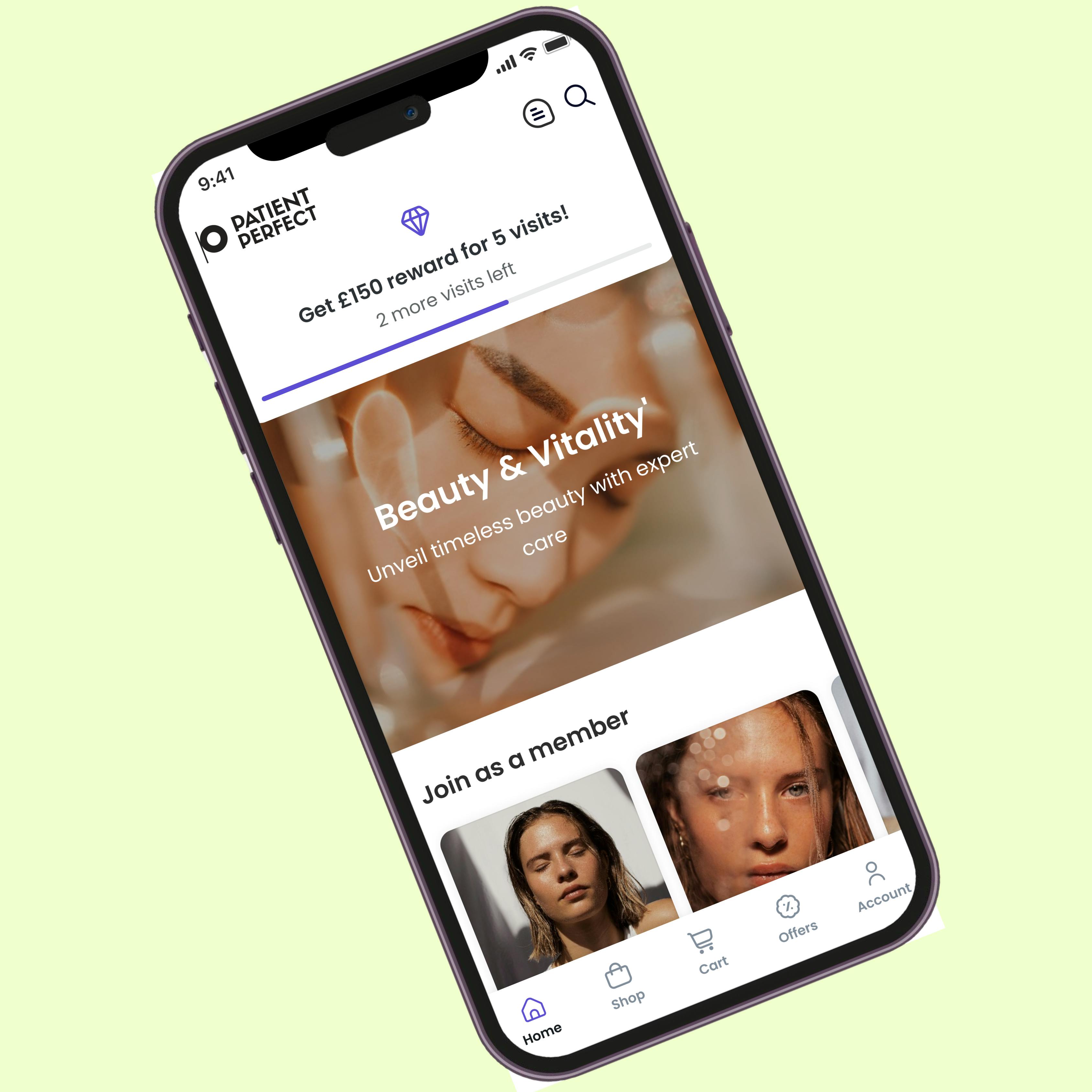
The platform automates membership payments, renewals, benefit tracking, and member communications. Patients manage their own appointments, purchases, and account details through a custom-branded app, reducing routine inbound queries to your reception team. Referrals, rewards, and personalised communications all run through the same system without requiring manual input each time.
Every clinic gets a fully bespoke setup with hands-on onboarding support, so we configure the platform around how your practice actually operates rather than a generic template. Most practices are live within two weeks, and the admin reduction is typically felt within the first month as automated processes replace manual ones.
Click here to book a free demo and see how PatientPerfect can reduce your admin load while growing your membership revenue at the same time.
Frequently asked questions
How can dental practices reduce admin without hiring more staff?
The most effective approach is to identify the admin tasks you repeat most often and automate them. The right software can handle recall reminders, appointment confirmations, membership payment collection, benefit tracking, and routine patient communications automatically. This removes manual effort from tasks that currently take hours each week, without requiring additional headcount.
What is the biggest source of admin in a dental practice?
Recall management and patient communication are consistently the largest sources of manual admin in dental practices. Identifying overdue patients, generating and sending reminders, following up on non-responses, and tracking who has and hasn’t booked all require ongoing manual effort unless the right systems are in place. Payment handling, membership tracking, and inbound routine patient enquiries are the next biggest time consumers.
Does dental membership software reduce admin?
Yes, significantly. The main admin reduction comes from automating payment collection, renewal management, and benefit tracking, which together account for most of the manual overhead in running a membership manually. The right dental membership software handles all three automatically, so the admin workload stays flat even as the membership grows. PatientPerfect also reduces routine patient enquiries through a self-serve patient app, which cuts the volume of inbound calls your reception team needs to handle each day.
How does a patient app reduce admin for a dental practice?
A patient app gives patients a self-serve option for what they currently call or email about: checking appointment details, rebooking, purchasing treatments or products, checking membership benefits, and accessing practice information. When patients can do these things themselves, routine inbound queries drop. App-using patients return on average three times more each year, and their increased engagement comes with less demand on your team’s time rather than more.
What is the most time-consuming admin task for dental receptionists?
Across most dental practices, recall chasing and appointment management consume the most receptionist time. Manually identifying overdue patients, sending reminders, following up, managing cancellations, and filling last-minute gaps all require repeated attention throughout the day. Manually handling payments, answering routine patient queries, and managing membership records are also consistently cited as major time drains. Automating any one of these has a meaningful impact; automating several creates a fundamentally different working environment for your team.
How quickly can a dental practice reduce its admin workload?
With the right software, most practices reduce admin workload within the first month of going live. Automated recall reminders reduce inbound calls from patients chasing appointment confirmations. Membership automation removes the manual tracking that previously required regular attention. Patient app adoption, which typically builds over the first few weeks as existing patients download and use it, steadily reduces routine inbound queries. PatientPerfect configures and launches the platform within two weeks, so the impact is felt quickly rather than after a lengthy implementation.
revenue growth
rewards
loyalty
marketing
client engagement
Memberships
Related articles

PatientPerfect
Sep 20, 2026
How to Get More Dental Patients in 2026 Without Spending More on Ads
Most conversations about growing a dental practice end up in the same place: more marketing spend, more ad budget, more money going out before a single new patient walks through the door. It's a reasonable starting point, but for a lot of independent practices, it's not the most efficient place to focus. The practices growing steadily in 2026 aren't necessarily the ones spending the most on paid acquisition. They're the ones that have built proper systems for keeping the patients they already have, turning those patients into referrers, and making the overall experience good enough that word of mouth does a significant portion of the work. This guide covers the most effective ways to grow your patient base in 2026 without increasing your ad spend, and how the right infrastructure makes each of them easier to execute consistently.
revenue growth
rewards
loyalty
marketing
client engagement
Memberships

PatientPerfect
Sep 20, 2026
Aesthetic Clinic Memberships vs Prepaid Credits: What's the Difference?
More aesthetic clinics are moving away from a purely appointment-by-appointment model, and for good reason. Recurring revenue, stronger patient loyalty, and more predictable cash flow all come from building relationships with patients that extend beyond individual treatments. The two most common ways to do that are memberships and prepaid credit packages, often called beauty banks or treatment banks. Both have genuine value, but they work differently, suit different patients, and create different outcomes for the clinic. Understanding the difference clearly helps you decide which to offer, how to position each one, and whether running both together makes sense for your business.
revenue growth
rewards
loyalty
marketing
client engagement
Memberships

PatientPerfect
Sep 20, 2026
The £100k membership strategy - How to generate over £100k of annual income for your aesthetic clinic or dental practice through membership subscriptions
Most clinic owners think about growth the same way. More new patients. More marketing. More budget going out before anything comes back in. It’s an exhausting cycle, and it’s also an inefficient one, because the revenue you’re spending money to find is often already sitting in the patient base you’ve already built. The clinics generating £100k or more in annual membership revenue aren’t the ones with the biggest ad budgets. They’re the ones that have built a recurring income structure from patients who were already loyal, already spending, and already coming back. A membership doesn’t ask those patients to spend more. It converts the spending they’re already doing into a predictable monthly commitment. This guide explains exactly how the maths works, what it takes to get there, and how aesthetic clinics and dental practices across the UK are building membership programmes that generate six-figure annual revenue without first needing to significantly grow their patient list.
revenue growth
rewards
loyalty
marketing
client engagement
Memberships